
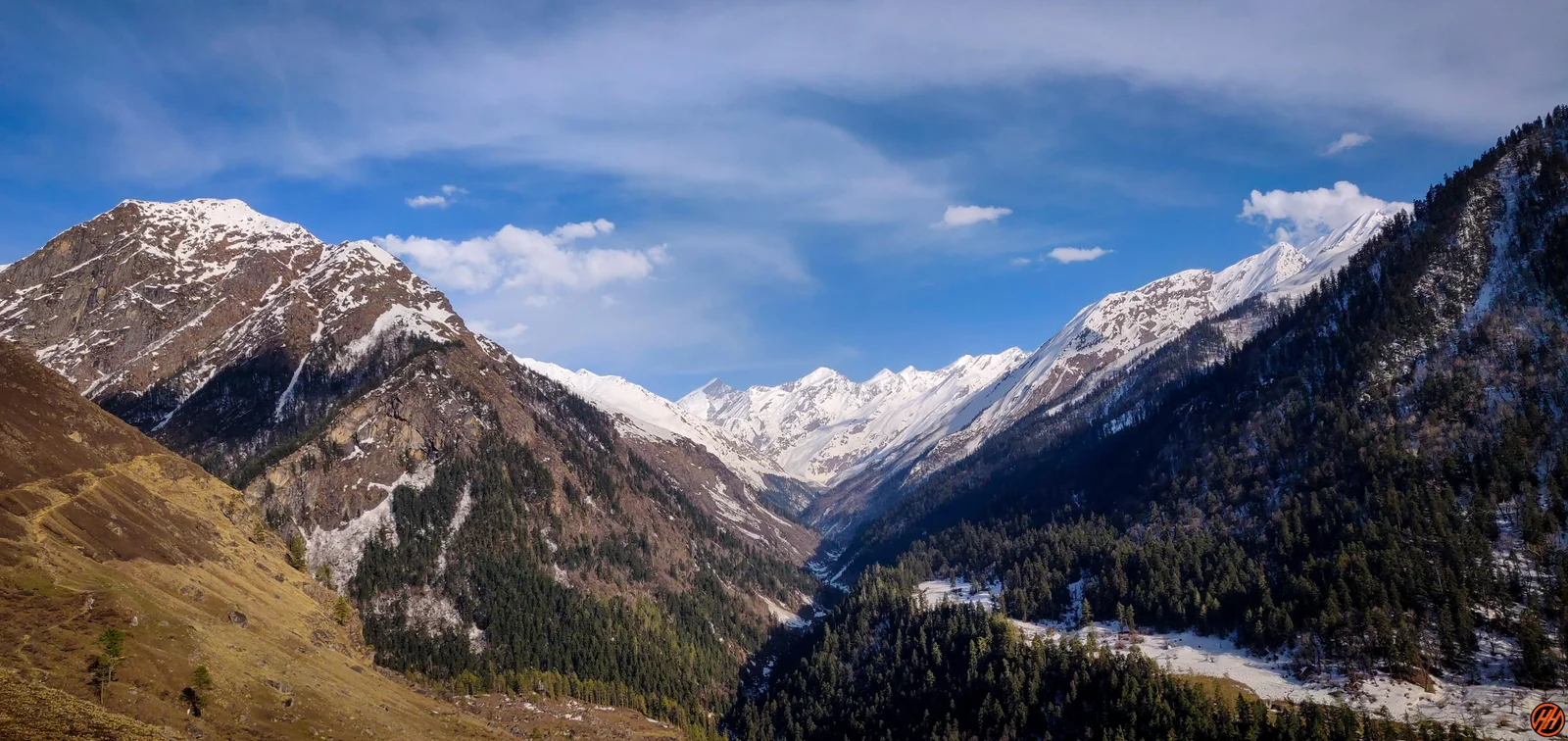
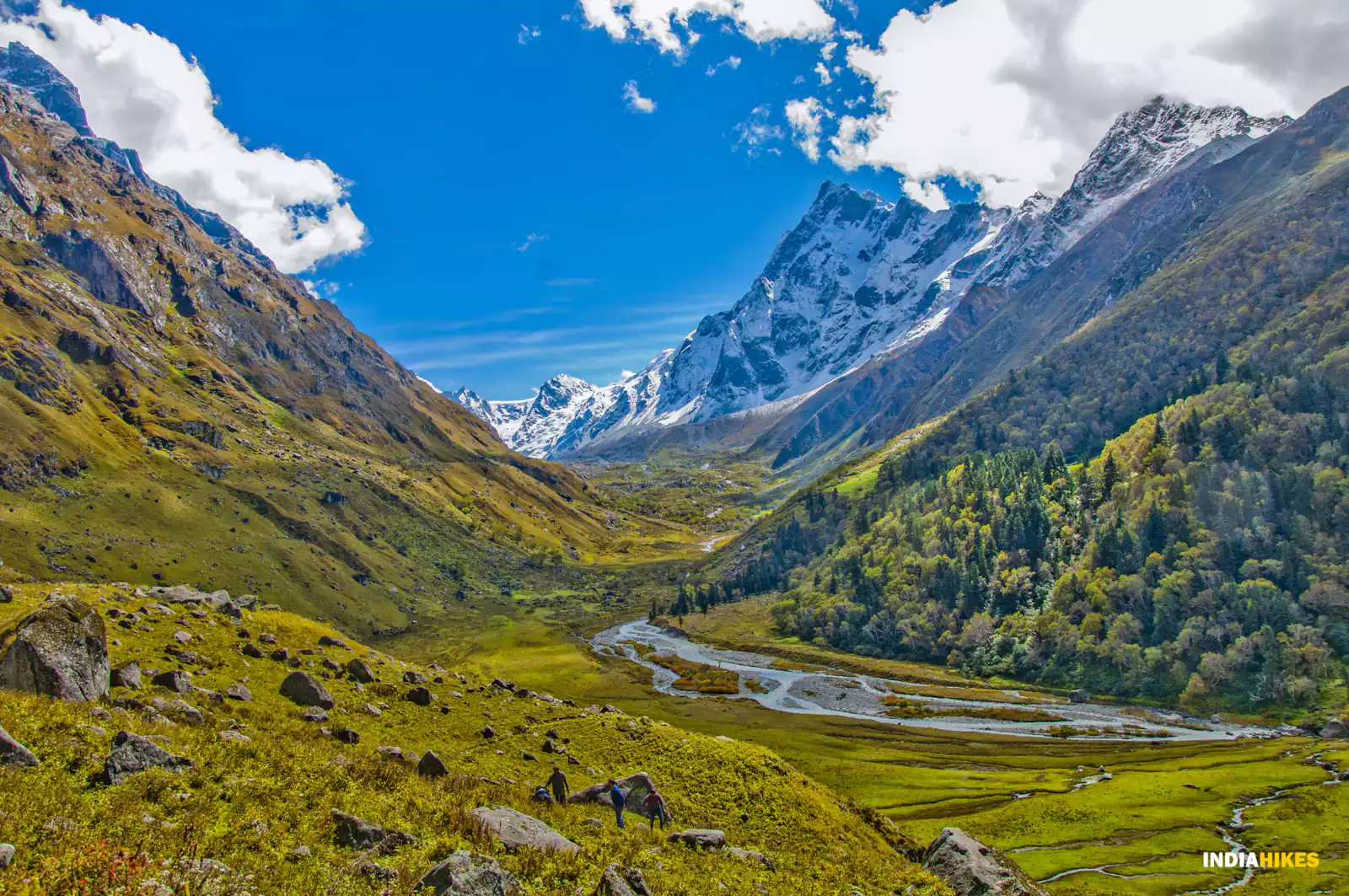
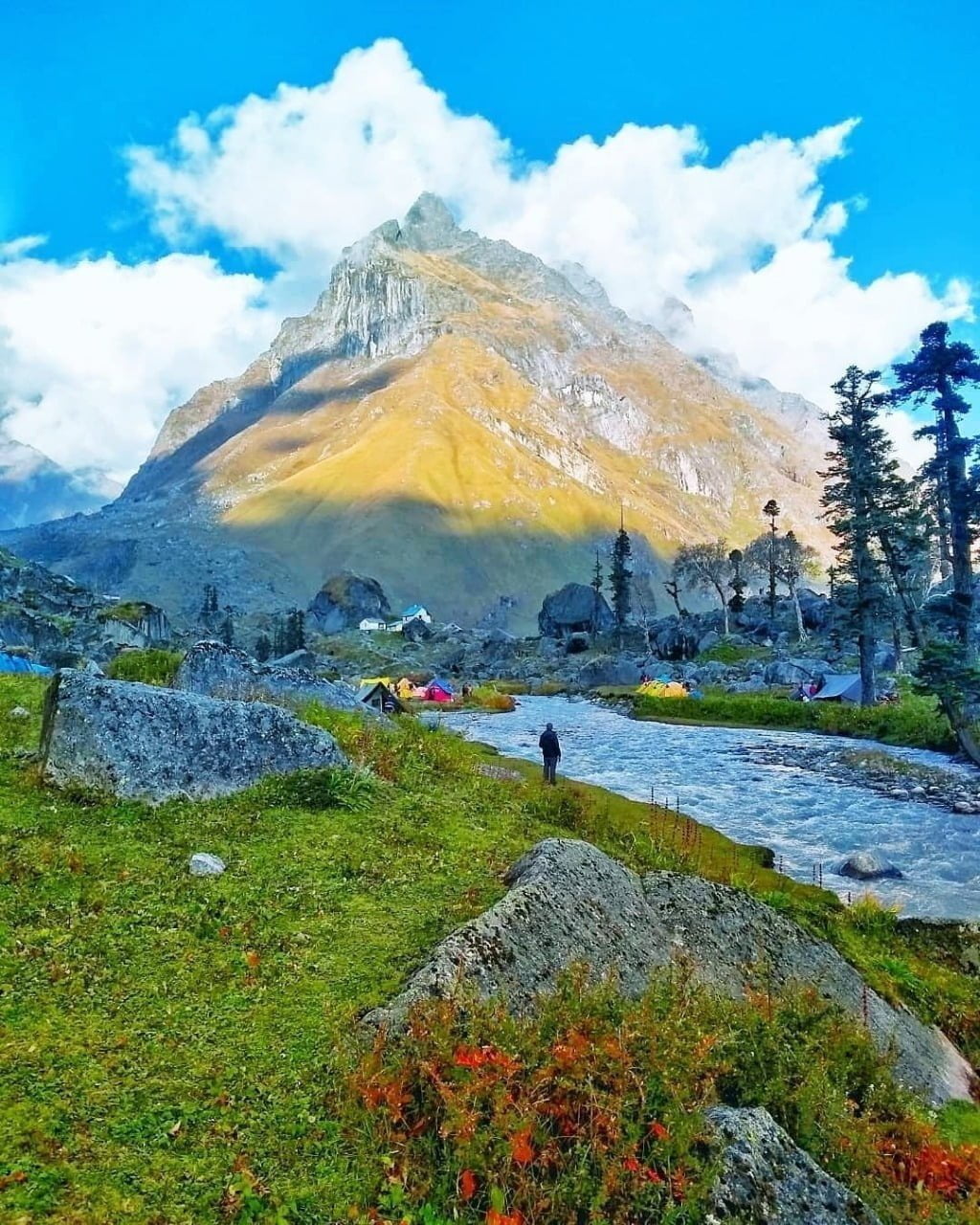


Har Ki Dun — the "Valley of Gods" — is one of Uttarakhand's most enchanting hidden gems. Tucked deep inside the Govind Pashu Vihar National Park, this hanging valley is shaped like the palm of a hand, cradled by towering snow-clad peaks of the Garhwal Himalayas.
The valley is famous not just for its sublime natural beauty but for its ancient wooden villages — Osla, Seema, and Har Ki Dun meadow — where Garhwali communities maintain centuries-old traditions linked to the Mahabharata. This 7-day trek is a journey through both landscape and living history.
The Mahabharata Connection
Har Ki Dun is believed to be the route the Pandavas took to reach heaven (Swargarohini). The villages here are said to worship Duryodhana — the Kauravas — as a local deity, which makes this one of the most unique mythological landscapes in all of India. Local festivals here still celebrate this ancient connection.
Osla Village
Ancient wooden houses with intricate carvings. Home of the Duryodhana temple — a unique mythological site found nowhere else in India.
Seema Village
The last inhabited village before the valley meadow. Stone houses, friendly locals, and stunning views of snow-clad Swargarohini peak.
Har Ki Dun Meadow
The valley floor at 3,566m — a pristine alpine meadow ringed by Swargarohini, Bandarpoonch and Black Peak. Paradise on earth.
Mahabharata's Mythological Route
Trek through landscapes linked to the Pandavas' journey to heaven — mythological significance unlike any other trek.
Ancient Wooden Villages
Explore Osla and Seema — villages with centuries-old wooden architecture and the rare Duryodhana temple.
Swargarohini Panorama
Views of Swargarohini (6,252m), Black Peak and Bandarpoonch from the hanging valley at 3,566m.
Govind Wildlife Sanctuary
Rich biodiversity — chance to spot monal pheasants, Himalayan tahrs, snow leopards and musk deer.
Snow-Clad Peak Vistas
The valley is framed by permanently snow-covered peaks — creating stunning views at every turn.
Small Group Experience
Maximum 16 people only — ensuring an intimate, responsible, and truly immersive trek experience.
Dehradun → Sankri Drive
Pick up from Dehradun / Mussoorie. Drive through the scenic Yamuna Valley — Barkot, Naugaon — to the base camp at Sankri village. Dinner and overnight at guesthouse. Trek briefing and gear check.
Sankri to Taluka to Seema Village
Drive from Sankri to Taluka (1,900m), then begin the trek along the Supin River through dense forests of oak and rhododendron. Arrive at Seema village — a beautifully preserved Garhwali village with wooden houses.
Seema to Osla — The Mythological Village
Trek through open meadows and river crossings to the ancient Osla village. Visit the legendary Someshwar Mahadev temple and the famous Duryodhana temple — one of the very few temples in India where Duryodhana is worshipped as a deity.
- 7:00 AM: Breakfast and depart Seema
- 8:30 AM: Cross the Tons river bridge
- 10:30 AM: Arrive Osla village
- 11:00 AM: Visit Duryodhana temple (unique in all India)
- 12:00 PM: Local Garhwali lunch at a homestay
- 3:00 PM: Explore village — wooden architecture, local craft
- Evening: Cultural interaction with locals
Osla to Har Ki Dun Valley Meadow
The day you've been trekking toward — Har Ki Dun valley at 3,566m. A vast, pristine meadow completely encircled by the Swargarohini massif and Bandarpoonch. Camp here for an unforgettable night under the stars with views of snow peaks on all sides.
- 6:30 AM: Early breakfast — this is a long day
- 7:00 AM: Depart Osla through meadows and stream crossings
- 9:00 AM: Enter Govind Wildlife Sanctuary zone
- 11:00 AM: First views of Har Ki Dun valley appear
- 12:30 PM: Arrive Har Ki Dun (3,566m) — set up camp
- Afternoon: Explore the valley, spot Himalayan monal
- Evening: Sunset on Swargarohini (6,252m) — breathtaking
- Night: Stargazing in one of India's darkest skies
Valley Exploration Day — Swargarohini Views
Rest day at the valley — optional short trek toward the base of Swargarohini glacier. Wildlife watching for Himalayan tahrs, snow leopard tracks, and beautiful Himalayan birds. Afternoon rest, photography, and acclimatization.
Har Ki Dun → Seema → Taluka
Begin the descent back through the valley. The return route offers different perspectives and lighting on all the landscapes. Camp or guesthouse at Taluka. Well-deserved hot meal and rest after a long descent.
Taluka → Sankri → Dehradun
Drive back from Sankri to Dehradun. Arrive by evening — filled with stories of ancient villages, mythological valleys, and the eternal Himalayas. Drop at Dehradun railway station or as agreed.
Included
Not Included
I've done 12 Himalayan treks but Har Ki Dun moved me differently. Walking into Osla and seeing the Duryodhana temple — knowing this mythology was alive here for centuries — sent chills down my spine. The valley itself is unearthly beautiful. MilesNPeople's team was exceptional.
The night at Har Ki Dun meadow — camping under a sky exploding with stars, with the Swargarohini peak glowing white in the moonlight — is the single most beautiful moment of my life. The small group (only 12 of us) made it deeply personal. Highly recommend this over busier treks!
Har Ki Dun is rated Moderate. The daily distances are 8–18km on well-marked forest trails. The altitude gain is gradual and the maximum altitude is 3,566m — manageable with good acclimatization. Prior trekking experience is helpful but not mandatory. Good physical fitness is required.
Apr–Jun: Rhododendron blooms, green meadows, clear mountain views. Sept–Nov: Best season — crisp air, brilliant clarity, gold autumn foliage. December: Early winter snow. January–March: Heavy snowfall — trekking not recommended without winter expertise. The valley is typically accessible April to December.
Har Ki Dun lies inside the Govind Pashu Vihar National Park — a protected wildlife sanctuary. We strictly follow responsible trekking principles and limit group size to minimize ecological impact, protect wildlife habitats, and ensure a genuinely intimate experience for all trekkers.
Yes! The Duryodhana temple in Osla village is one of the rarest religious sites in India — where the Kauravas are worshipped. A visit and brief cultural interaction with the village is included in the Day 3 itinerary. Our guide will explain the fascinating mythology and local traditions.
Wildlife sightings cannot be guaranteed — nature keeps its own schedule! However, Himalayan monal pheasants, snow pigeons, langur monkeys, and Himalayan tahrs are commonly spotted. Snow leopard sightings are rare but possible in higher areas. Our guides are experienced naturalists who maximize your chances of spotting wildlife.